In this quite intelligent world of technology, if tools like ChatGPT have come into existence, the tools to detect them have as well. There are certain ways to tell if something was written by ChatGPT, and in this blog, CudekAI is going to reveal some hidden secrets.
Why Identifying Human or AI Writing Matters Today
As AI tools such as ChatGPT rapidly improve in fluency and complexity, distinguishing Human or AI text has become increasingly important for students, teachers, writers, and marketers. The rise of machine-generated writing has introduced challenges in academic honesty, digital marketing transparency, and content credibility. This makes tools that detect AI a necessary part of modern writing verification.
Students rely on AI detection to ensure originality in their essays. Teachers use these systems to verify academic integrity. Writers check their drafts to avoid unintentional AI patterns, while marketers depend on detection tools to safeguard brand trust.
Patterns and Style of AI-generated Content
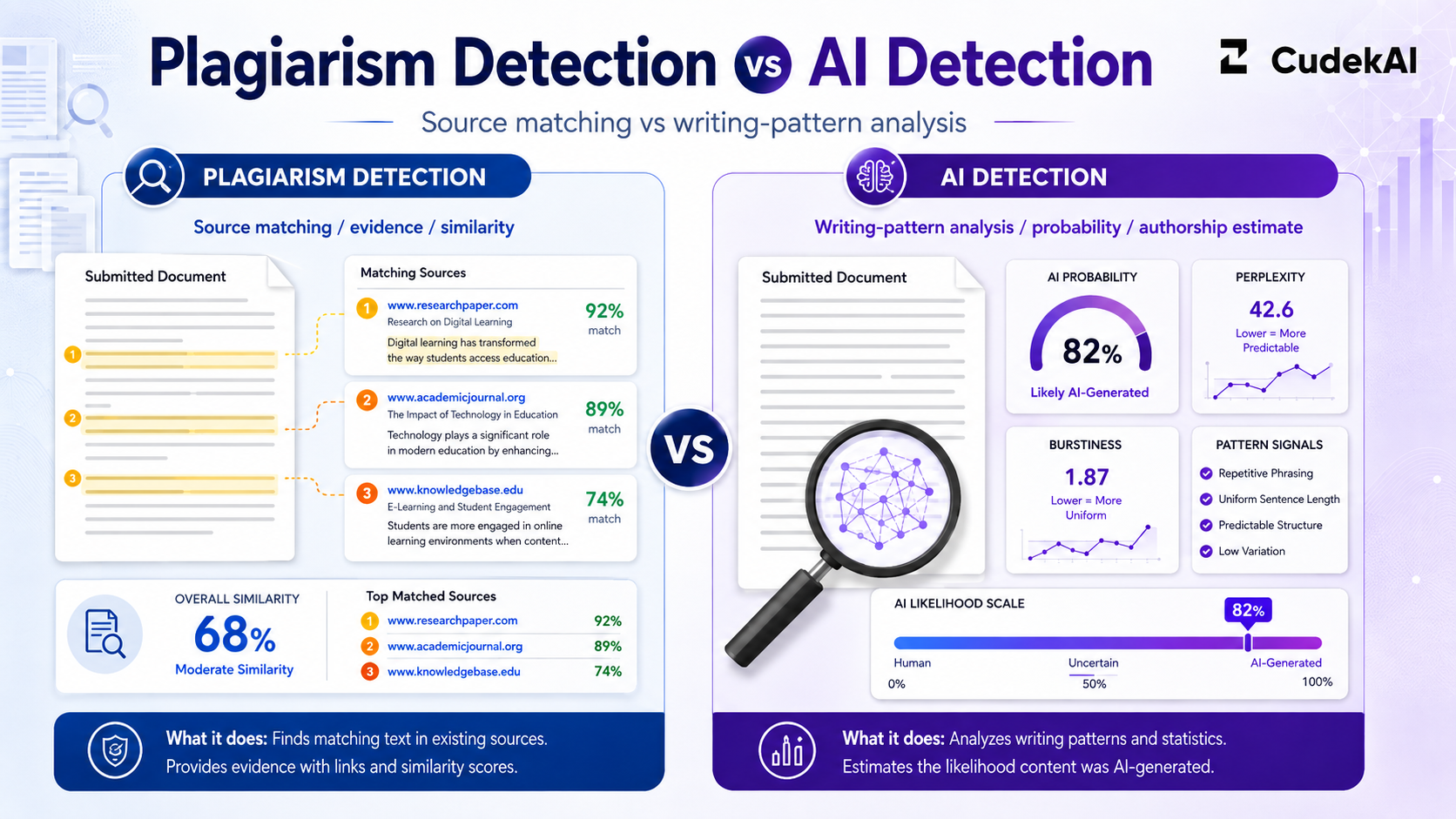
As artificial intelligence models like ChatGPT have become advanced, it has become a bit hard to detect it sometimes. But there are a few ways that can help with this, which solves the question of how to Tell If Something Was Written by ChatGPT? There are three main indicators: repetitive phrases, lack of emotional depth, and overuse of formal language.
AI tools like ChatGPT use repetitive phrases as they are trained to do so. The content in the system is limited to a specific period. Due to probabilistic patterns, it predicts the next word based on a sequence that was used before. There are similar sentence constructions in one paragraph. Whereas human writers write each sentence according to the interests of the readers.
Next up, there is a lack of emotional depth and personal experience. ChatGPT would usually create content based on patterns rather than emotions and personal stories. This makes the content quite suspicious and indicates that it’s written by ChatGPT. The human writer discussing his personal experiences adds more depth to the content. Consider a paragraph about the vacation to Thailand. The human writer will write this more beautifully by describing each point that may include sceneries, places, and travel experiences, but if written with ChatGPT, only major things about Thailand will be discussed, rather than the small details.
Another indication that the content is written by ChatGPT is the overuse of formal language. The content written by human writers is not too formal. They write according to the requirements and specifications. For example, there might be no use of slang words or informal or conversational language. The extra use of formal words makes the content dull and unnatural.
Why These Patterns Appear in AI-Generated Text
AI writing models generate text using statistical patterns rather than lived experiences or emotional recall. Tools such as ChatGPT rely on probability-based predictions, producing writing that often lacks spontaneity. These systems reuse familiar sentence structures and vocabulary because they are trained to generate the ‘most likely next word.’ This explains why AI detection tools can recognize robotic rhythm, uniform tone, and repeated phrasing. For a foundational walkthrough of these detection mechanics, our guide on how AI detection works explains the linguistic signals, pattern recognition methods, and analytical layers that determine reliability.
This explains why AI detection tools can recognize robotic rhythm, uniform tone, and repeated phrasing.Guides like Detect AI to Craft Flawless Content show how AI models can sound polished but still lack narrative depth and personal detail.
For students, this helps distinguish genuine learning from automated shortcuts. For marketers, it protects brand messaging from sounding generic or emotionless. Writers can also use these clues to strengthen authenticity in their work.
How Human Writers Use Emotional Context Differently
Human writers naturally incorporate subtle details drawn from memory, emotion, and lived experience. When writing about travel, relationships, or personal discovery, humans embed sensory descriptions, shifts in voice, and emotional interpretations that AI cannot replicate.
AI models, however, produce content by predicting patterns seen in training data. This is why checking whether the content feels emotionally grounded is one of the strongest methods to Detect AI.
Blogs like AI Detection Insights highlight how emotional intelligence remains one of the most reliable signals of human authorship.
Content and Context Clues
ChatGPT usually contains more general answers. It lacks contextual understanding and appears relevant only. For example, talking about complex and difficult topics. Chathpt will only provide general and broad answers rather than diving deep into the details. A human writer, on the other hand, will provide a response that will add short and specific details, stories from personal experiences, and specialized knowledge. AI will provide facts but no detailed analysis.
Another clue is the use of inconsistent tone throughout. What does that mean now? It means that when artificial intelligence tools like ChatGPT generate content, they make unusual shifts in the tone like changing the text from formal to informal immediately, without thinking if it makes sense or not. Take an example of a single paragraph that might have started from a formal introduction and changed to a more casual and conversational style in the end. Aberration in the content will make it pretty much less professional and interesting.
How Tone Consistency Helps Differentiate Human or AI Text
Tone consistency is an important marker of authenticity. Human writers typically maintain a steady voice throughout their work, even when shifting between formal and informal moments. Meanwhile, AI systems may switch tone mid-sentence because they follow probability patterns, not narrative intention.
Detecting sudden tone changes, unnecessary transitions, or overly neutral explanations can help identify AI-generated text. Tools such as the ChatGPT detector highlight these tonal issues more precisely and provide objective evidence for academic or publishing needs.
Writers can apply this knowledge to refine their voice. Marketers can use it to ensure consistent brand messaging. Teachers can use it to evaluate authenticity in student writing.
Practical Strategies for Checking the AI Content
Cross-reference the content with the source to prove its verification. ChatGPT might contain pieces of information that are wrong and not verified. Therefore, it is extremely important to verify the facts from Google and different pages. If the content does not match the sources and has information of its own, there are higher chances that it’s incorrect.
Another practical way is to check the content with existing literature on the same topic. Human writers usually write content that already exists and do not create anything of their own unless it’s about telling a personal experience. Whereas, artificial intelligence tools like ChatGPT create content of their own. So, if the written content does not align with any source out there, then it’s surely written by ChatGPT.
Ensure that the sources used are of high quality. AI might use some non-existent sources and studies that are hard to verify.
Contextual inconsistency
The human-written content usually makes logical sense from the start. AI text might produce content that is logical but lacks overall structure.
Another point is that content written by ChatGPT may not contradict itself especially when it comes to longer pieces of content. It might state that the specific diet is useful and then suddenly shift to telling why it’s harmful. The tool does this without connecting the two points.
These are some of the reasons why AI detection tools like CudekAI have been launched. To properly verify the content and provide solid proof, they are used to check for originality and authenticity.
Why AI Detection Tools Strengthen Writing Across Industries
AI detection tools serve more than one purpose. They help students avoid academic misconduct, enable marketers to maintain brand integrity, assist teachers in fairly evaluating work, and support writers in maintaining personal voice. Using an AI detector alongside the Plagiarism checker provides a full authenticity verification system. For users choosing between leading detector platforms, our CudekAI vs GPTZero comparison covering which AI generated detector is best examines accuracy, features, pricing, and value across both tools.
Using an AI detector alongside the Plagiarism checker provides a full authenticity verification system.
Why Fact-Checking and Source Verification Matter
AI-generated content often appears confident even when it contains inaccuracies. ChatGPT-style tools may hallucinate facts, invent sources, or summarize outdated information. This is why verifying details is one of the most effective ways to Detect AI.
Using authoritative sources prevents misinformation in both academic and marketing contexts. Blogs such as AI Detection for Rankings emphasize how fact-checking keeps content trustworthy and prevents penalties from search algorithms.
Students benefit by avoiding accidental misinformation. Writers maintain credibility. Marketers ensure their messaging meets audience expectations. Teachers gain a reliable method to assess genuine understanding.
Author Research Insights
This blog aligns with cross-disciplinary research from academic integrity analysts, digital marketing strategists, and content quality evaluators.Supporting internal references include:
- AI Detection Explained
- Online AI Detector Guide
- AI Plagiarism Detector Insights
- Detect AI Tips
These resources reinforce that emotional depth, experiential context, and logical coherence remain core identifiers of human writing.
Frequently Asked Questions
1. What are the easiest ways to tell if content was written by ChatGPT?
Look for repetitive sentence patterns, overly formal tone, missing personal experience, and generic explanations. A ChatGPT detector can identify these signals more accurately.
2. What do students and teachers use to detect AI in writing?
Most rely on tools such as the AI content detector to check academic integrity. Teachers scan assignments for AI patterns while students verify originality before submission.
3. Why does AI sometimes provide incorrect or made-up information?
AI models generate predictions, not verified facts. This is why fact-checking and cross-referencing are essential strategies for spotting AI content.
4. How do marketers check if their content was written by AI?
Marketers use AI detection tools and tone-checking methods to maintain brand credibility. For further tips, see Detect AI to Protect Rankings.
5. Can AI-generated content be used for SEO?
Only if heavily edited by humans. Search engines prioritize original, human-created content.This is discussed in AI Detection Insights.
6. Are AI detectors accurate for long content?
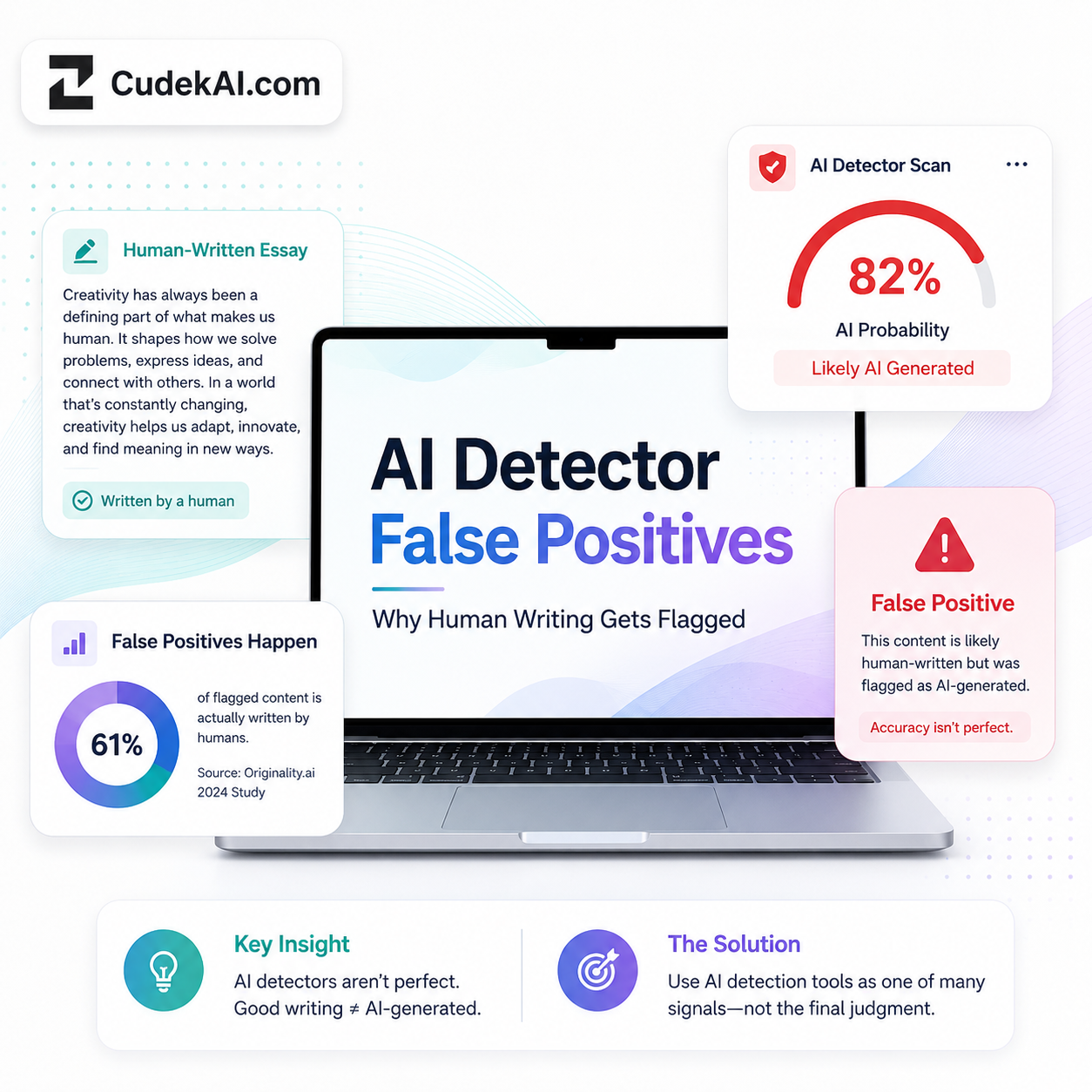
Yes — especially when combined with the AI plagiarism checker to ensure both originality and human-like structure. For a deeper look at real-world detector accuracy ranges and what features matter most, see our guide on how accurate is chatGPT detector.
7. How can writers avoid sounding like AI?
Add personal stories, emotional descriptions, unpredictable sentence flow, and real-world details. Tools that Detect AI help identify robotic patterns.
The Bottom Line
In this blog, the various methods of how AI-written content can be detected have been discussed. These are very common and obvious ways to check for AI content. Another trick is to verify the content with the help of a GPT detector. This article says it all: no matter how advanced the technology gets, human-written content will always win the hearts of the readers. From short details to emotional depth to a great structure, it has all of these. No artificial intelligence tools like ChatGPT can beat or replace it. Therefore, it is a wise decision to think of these tools as a side help only, rather than a replacement.